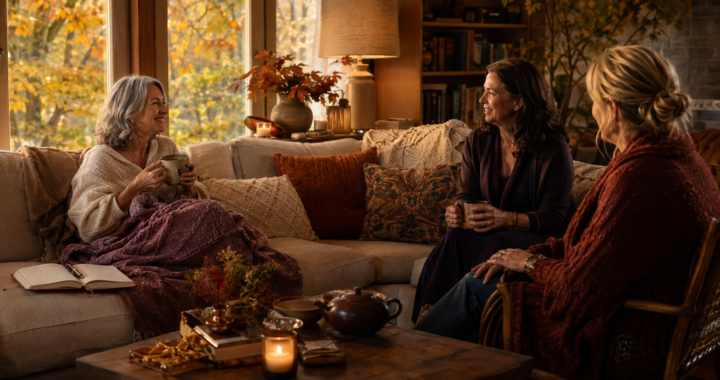




Some feelings do not need advice right away. They need room.
That is why a safe space to process emotions matters so deeply, especially when you are carrying something tender, complicated, or difficult to explain. There are seasons when you can function well on the outside, keep up appearances, answer emails, care for others, and still feel a quiet pressure building underneath it all. What you need in those moments is not performance. It is a place where you can tell the truth without being rushed, corrected, or judged.
What a safe space to process emotions really means
A safe space to process emotions is not simply a pleasant conversation. It is not a room where someone nods politely while waiting to offer a quick fix. Real safety has depth to it. It allows you to bring what feels messy, contradictory, or unfinished and speak it aloud without fear that it will be minimized.
For many people, the hardest part is not having emotions. It is having nowhere appropriate to place them. Friends may care, but they may be too close to the situation. Family may love you, but they may have their own opinions, loyalties, or discomfort. Even strong, capable people often discover there are thoughts they cannot comfortably share in the spaces closest to them.
A genuine safe space makes room for complexity. You can feel grief and relief at the same time. You can love someone and know something is no longer right. You can be grateful for your life and still feel lost inside it. Mature emotional support does not force those realities into neat categories. It helps you hold them honestly until clarity begins to emerge.
Why privacy changes everything
When people know they will be met with discretion, they often say what they have been holding back for months or even years. That moment matters. Not because every answer appears at once, but because hidden things lose some of their power when spoken in a trustworthy space.
Privacy is not a luxury for emotionally honest reflection. For many adults, it is the condition that makes honesty possible. A professional, a parent, a spouse, a caregiver, or a person in a visible role may feel tremendous pressure to stay composed. They may be the one others lean on. They may be surrounded by people and still have no true place to put their own confusion.
A private, grounded conversation creates relief because it asks nothing of you except sincerity. You do not have to protect anyone else from your questions. You do not have to edit yourself so the other person stays comfortable. You can let the full weight of what you are carrying be named.
What emotional processing is not
There is often a misunderstanding that processing emotions means endlessly revisiting pain or becoming consumed by it. In healthy, grounded practice, that is not the goal.
Processing emotions means allowing yourself to notice what is true, giving language to it, and understanding what it may be asking of you. Sometimes that leads to release. Sometimes it leads to a difficult decision. Sometimes it simply gives shape to what has felt vague and heavy.
It also does not mean every feeling should drive every action. This is where wisdom matters. Feelings contain information, but they are not always instructions. A safe and discerning space helps you listen without becoming ruled by the loudest moment.
That balance is especially important in times of upheaval. When a relationship shifts, when trust is shaken, when your path no longer feels aligned, your inner world can become noisy. The work is not to silence it. The work is to hear it clearly enough that you can respond with integrity rather than impulse.
The quiet cost of having no safe space to process emotions
When people do not have a safe space to process emotions, they often begin carrying more than the original burden. They carry self-doubt about why they feel so strongly. They carry shame for not being over it yet. They carry exhaustion from trying to appear settled when they are not.
Over time, this can make life feel strangely narrow. Conversations stay on the surface. Decisions become harder because too much remains unspoken. You may start second-guessing your own inner knowing simply because it has not been witnessed or reflected back with care.
This is one reason emotionally intelligent guidance can be so meaningful. Being deeply heard does not make you weak or dependent. It often restores your ability to hear yourself. What was once tangled begins to separate into recognizable threads. You can tell what belongs to fear, what belongs to grief, what belongs to longing, and what belongs to truth.
What to look for in a safe, grounded guide
Not every supportive space is the right one for every person. Chemistry matters. So does maturity.
A grounded guide does not push you toward dramatic conclusions. They do not use your vulnerability to impress you or make you feel small. They listen beneath the surface, ask thoughtful questions, and help you recognize what is already becoming clear within you.
The right space will feel respectful, steady, and free of pressure. You should not feel handled. You should feel accompanied.
It also helps when the person holding that space understands that emotional complexity is part of being human, not something to be embarrassed by. Many people seeking spiritual guidance are not looking for fantasy. They are looking for honesty with depth. They want insight that respects both intuition and lived reality.
This is where a spiritually grounded conversation can offer something distinct. It can honor the inner life without drifting away from practical truth. It can make room for meaning, timing, relationships, and personal discernment while still remaining centered, calm, and clear.
Why some answers only emerge when you feel safe
People often think clarity comes from thinking harder. Sometimes it does. Often, though, clarity comes when the nervous effort to hold everything together begins to soften and you can finally speak plainly.
Safety changes what becomes accessible. When you are not defending yourself, explaining yourself, or bracing for judgment, deeper truths can rise. You may hear your own words differently. You may notice the pattern underneath the story. You may realize the question you came in with is not the deepest one after all.
That kind of insight rarely responds well to force. It needs patience, honest attention, and the quiet permission to unfold. In a confidential one-on-one setting, many people find themselves saying, I have never said this out loud before. That sentence often marks the beginning of real movement.
For some, that movement brings peace. For others, it brings a more truthful next step. The value is not that someone else takes over your life. The value is that you become more able to meet your life with steadiness and self-trust.
Making room for your own truth
If you have been carrying something privately, you may not need more noise around it. You may not need another opinion from someone invested in the outcome. You may need a calm place where what you feel can be spoken, held, and understood without judgment.
That is not indulgence. It is care.
There are times when a trusted conversation becomes the turning point, not because it gives you a script, but because it gives you back your own center. In work like John Culbertson’s, people often seek that kind of space when life feels too layered to sort out alone. They are not coming to be told who to be. They are coming to hear more clearly what their own spirit has been trying to say beneath the noise.
If you are in a heavy season, let this be a gentle reminder: clarity does not always arrive through force. Sometimes it arrives when you are finally safe enough to tell the truth.