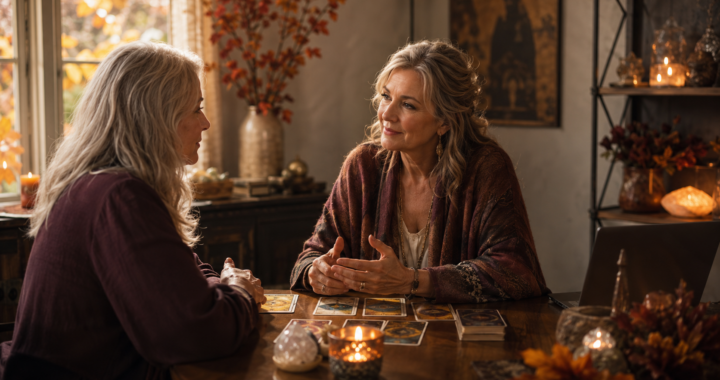




Some questions feel too tender to bring into everyday conversation. You may be functioning well on the outside, meeting responsibilities, answering texts, going to work, showing up for family, while privately carrying a decision, a grief, a relationship strain, or a spiritual unease that does not fit neatly anywhere. A private spiritual counseling session exists for that kind of moment – when what you need is not performance, not pressure, but a safe place to be honest.
For many people, the hardest part is not the question itself. It is the loneliness of holding it alone. There are seasons when even caring friends cannot fully meet you there. They may have opinions, but not patience. They may love you, but still make you feel rushed, exposed, or misunderstood. A confidential one-on-one session offers something different: space to speak plainly, be heard without judgment, and receive insight that honors both your inner life and your real-world circumstances.
Why a private spiritual counseling session matters
Privacy changes the quality of a conversation. When people know they do not have to protect others from their truth, they often speak with a depth that surprises even them. What comes forward is not always dramatic. Sometimes it is a quiet admission: I already know this relationship is changing. I am more tired than I have let myself admit. I cannot keep pretending this path still fits who I am.
That kind of honesty is powerful because it restores self-recognition. A spiritually grounded counseling session is not about handing your life over to someone else. It is about being met by a steady, intuitive presence that helps you hear what has been buried under fear, confusion, or emotional noise. The goal is not dependency. The goal is clarity.
This is especially meaningful for people who are used to being the strong one, the capable one, or the private one. Many thoughtful adults carry enormous emotional weight quietly. They do not want spectacle. They do not want empty reassurance. They want a conversation that can hold what feels difficult, personal, and unresolved without turning it into a performance.
What a private spiritual counseling session can help you see
Every session is different because every life is different. Still, there are common reasons people seek this kind of guidance. Some come in the middle of a major transition – a relationship shift, a career crossroads, a move, a loss of direction, a change in family dynamics. Others come because something in them feels unsettled, and they cannot yet name why.
A good session does not force meaning too quickly. It helps you slow down enough to notice what is true. Sometimes the value is confirmation. You may already sense what needs attention, but hearing it reflected back with care can strengthen your trust in yourself. Sometimes the value is perspective. A situation that has felt tangled can begin to separate into clearer threads once someone is listening deeply and asking the right questions.
There is also a spiritual dimension that many people hunger for but rarely find in ordinary conversation. Not something theatrical or grand, but a grounded acknowledgment that your life has meaning, that inner knowing matters, and that discernment can coexist with practical reality. You do not have to choose between wisdom and common sense. In a strong session, both are welcome.
What happens during the session
People often ask what a private spiritual counseling session actually feels like. The simplest answer is this: it feels like entering a conversation where you do not have to edit yourself so much.
Most sessions begin with what is present now. You may arrive with a clear question, or you may only know that something feels heavy. Either is fine. A skilled guide listens not only for facts, but for what is underneath the facts – the hesitation, the repeated pattern, the unspoken fear, the truth you almost say and then pull back.
From there, the conversation unfolds with both intuition and grounded reflection. Insight may come through direct impressions, through careful listening, through the meaning that emerges when your story is spoken aloud, or through thoughtful questions that help you see your situation from a different angle. The process is personal and responsive, not scripted.
What matters most is the quality of presence. You should feel respected, not managed. Supported, not steered. Challenged gently when needed, but never pushed beyond what is useful. Real guidance is not dramatic. It is often simple, clear, and deeply relieving because it speaks to what your inner life has been trying to bring to the surface.
What a session is not
It helps to be clear about this. A spiritually grounded counseling session is not about someone else controlling your next move. It is not entertainment. It is not a set of absolute pronouncements about your future. And it is not a substitute for your own judgment.
The best guidance leaves you more connected to yourself, not less. It may affirm what you sense. It may reveal what you have avoided. It may help you name a truth that changes the way you move forward. But it should never ask you to abandon your agency.
That distinction matters. When people are hurting or uncertain, they can be vulnerable to anything that promises certainty. Yet certainty is not always the most honest or helpful thing. Sometimes what is needed is not a prediction, but a wiser way to hold the question. Not a fantasy of control, but a steadier relationship with what is real.
Who tends to benefit most
A private spiritual counseling session tends to serve people who are inwardly reflective, even if they do not always show that side to others. These are often people with full lives and visible responsibilities. They may be successful professionally, deeply devoted to family, or known for being dependable. Yet beneath that outer steadiness, they are carrying concerns they do not feel safe voicing casually.
Some are in heartbreak. Some are wrestling with whether to stay or leave. Some are grieving a version of life that no longer exists. Some feel spiritually dry after years of doing what was expected of them. Others are simply tired of second-guessing themselves.
What they share is not a type of problem, but a need for honest, confidential space. They want insight, yes, but also emotional safety. They want to feel that what they are carrying can be held with maturity. That is why the tone of the session matters as much as the content. If the space does not feel discreet and grounded, real trust cannot form.
How to know if you are ready for a private spiritual counseling session
You do not need to be in crisis to seek support. Often, people come because they are ready to stop circling the same questions alone. They want a place where they can say what they have not said out loud and let that truth be met with care.
Readiness usually looks less like certainty and more like willingness. Willingness to be honest. Willingness to hear what rises to the surface. Willingness to consider that the answer may not be external at all, but something within you that needs clearer language, stronger trust, or compassionate acknowledgment.
If you are looking for someone to think for you, the experience may disappoint you. If you are looking for a wise, confidential setting where insight can emerge and your own inner knowing can strengthen, then the session can be profoundly useful.
That is part of what makes this work so meaningful. In the right hands, spiritual guidance does not make a person smaller or more dependent. It helps them come back to themselves with more honesty, more steadiness, and more peace. John Culbertson has built his practice around that kind of quiet, trustworthy work – guidance that respects the privacy of what is sacred and the dignity of the person seeking help.
There are times in life when being listened to with depth is its own form of relief. Not because every question is answered at once, but because what was once carried alone is finally spoken in a place safe enough to hold it. Sometimes that is where change begins – not in noise, but in truth gently recognized.